
Mebane Library Display

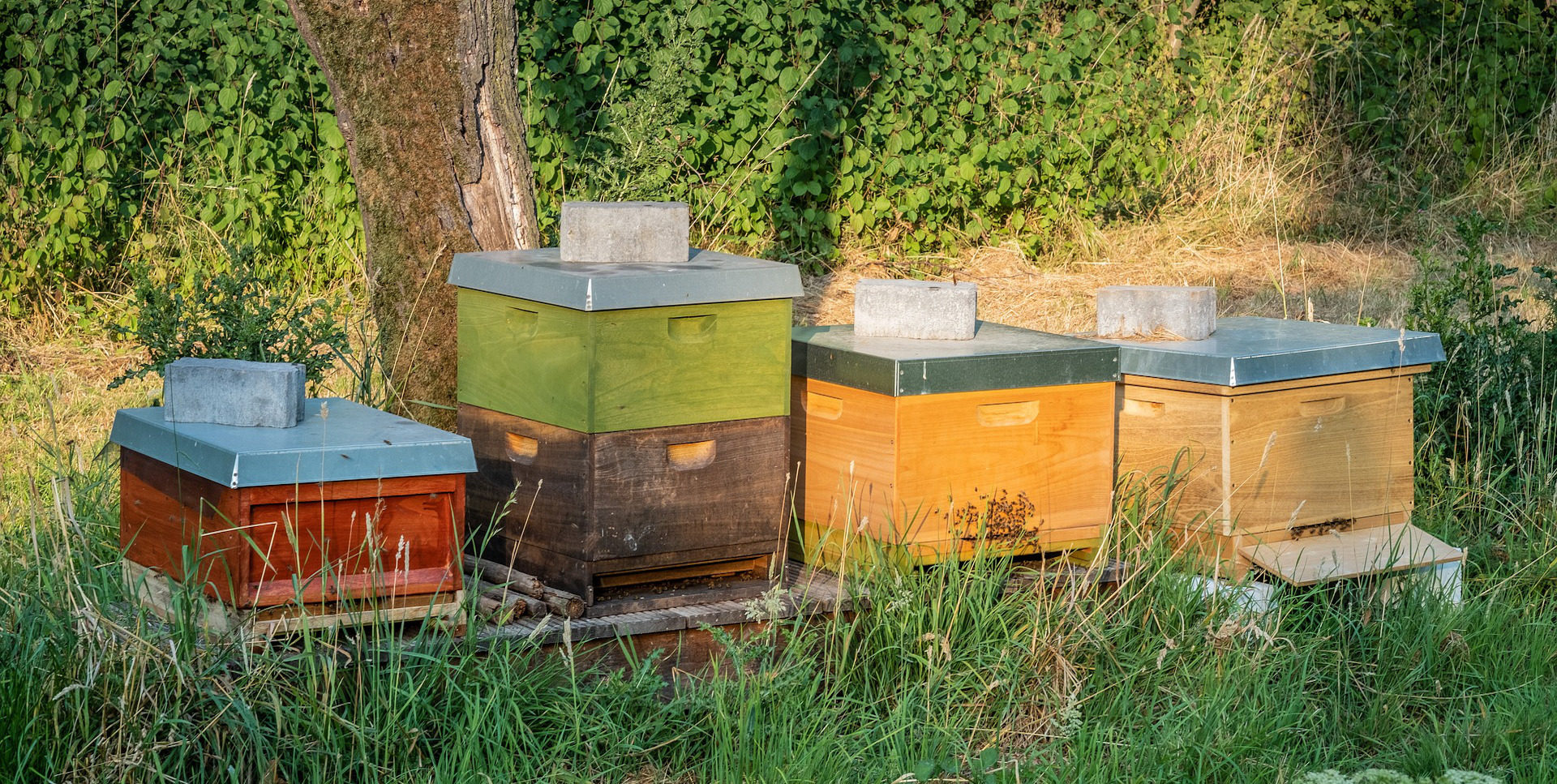
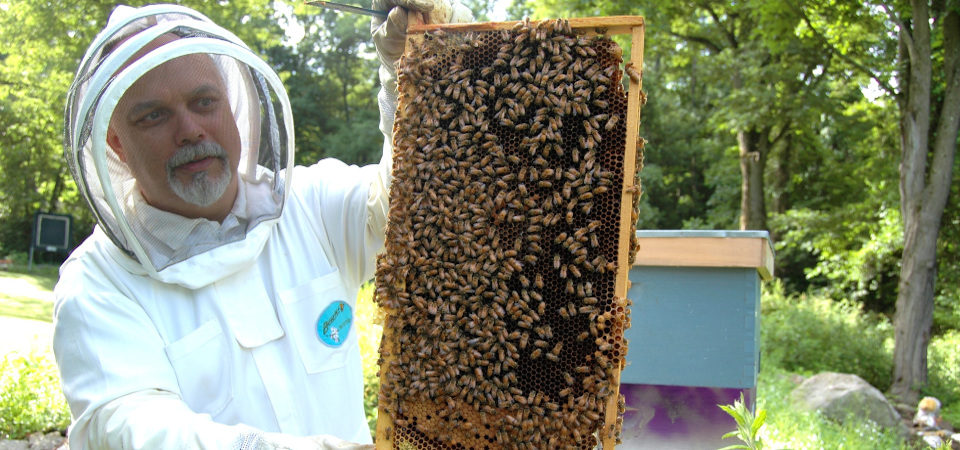
One of our ACB Club members, Toni Murray, organized a “display on beekeeping” for the Mebane Library with assistance from daughters Sophia and Logan Dill and Rebecca Fabbri. The beekeeping equipment and other supporting materials are on display in a glass case in the lobby of the library. Thanks are due to all ACB members who loaned Toni materials for this instructive display. Be sure to stop by the library before the end of January.

Mebane Public Library

Beekeeping Materials on Display

Natural Beekeeping Workshop

The Chatham County Center of North Carolina Cooperative Extension will offer a Natural Beekeeping workshop as part of its Enhancing Sustainability Series on Saturday, January 28, 2012 from 10:00 am-4:30 pm in the auditorium of the Agriculture Building in Pittsboro. The Agenda, Registration Form, Directions and Contact Information are available here.

Thanks are due to Ed Pondelik and Mike Ross for the alert.


Deadly Fly Parasite Spotted for First Time in Honey Bees

Deadly Fly Parasite Spotted for First Time in Honey Bees

SF State researchers’ new find may help understanding of ‘colony collaspe disorder’

SAN FRANCISCO — Honey bees can become the unwitting hosts of a fly parasite that causes them to abandon their hives and die after a bout of disoriented, “zombie-like” behavior, San Francisco State University researchers have found.

The phenomenon, first observed on the SF State campus, may help scientists learn more about colony collapse disorder (CCD). This mysterious ailment has drastically increased honey bee colony losses across the United States since its discovery in 2006.

So far, the fly parasite has only been found in honey bee hives in California and South Dakota, said SF State Professor of Biology John Hafernik. But the possibility that it is an emerging parasite “underlines the danger that could threaten honey bee colonies throughout North America, especially given the number of states that commercial hives cross and are deployed in,” Hafernik and colleagues write in the January 3, 2012 issue of PLoS ONEThe original PloS One Research Article can be found here.


Hafernik, who also serves as president of the California Academy of Sciences, didn’t set out to study the parasitized bees. In 2008, he was just looking for some insects to feed the praying mantis that he had brought back to SF State’s Hensill Hall after an entomology field trip. He scrounged the bees from underneath the light fixtures outside the biology building.

“But being an absent-minded professor,” Hafernik joked, “I left them in a vial on my desk and forgot about them. Then the next time I looked at the vial, there were all these fly pupae surrounding the bees.”


The fly, Apocephalus borealis, deposits its eggs into a bee’s abdomen. Usually about seven days after the bee dies, fly larvae push their way into the world from between the bee’s head and thorax. But it’s the middle part of this macabre story that may be the most scientifically interesting to those studying the dramatic and mysterious disappearance of honey bees.

Images of Apocephalus borealis and honey bees (below).

(A) Adult female A. borealis. (B) Female A. borealis ovipositing into the abdomen of a worker honey bee. (C) Two final instar larvae of A. borealis exiting a honey bee worker at the junction of the head and thorax (red arrows).

After being parasitized by the fly, the bees abandon their hives in what is literally a flight of the living dead to congregate near lights. “When we observed the bees for some time—the ones that were alive—we found that they walked around in circles, often with no sense of direction,” said Andrew Core, an SF State graduate student from Hafernik’s lab who is the lead author on the study.

Core won first place at the 2011 California State University Research Competition and the Geraldine K. Lindsay Award for excellence in the natural sciences at the annual meeting of the Pacific Division of the American Association for the Advancement of Science for his presentation of the bee research.

Bees usually just sit in one place, sometimes curling up before they die, said Core. But the parasitized bees were still alive, unable to stand up on their legs. “They kept stretching them out and then falling over,” he said. “It really painted a picture of something like a zombie.”

Bees that left the hives at night were more likely to bear the parasite than those who foraged during the day, the researchers found. Genetic tests of parasitized hives also showed that both bees and flies were often infected with deformed wing virus and a fungus called Nosema ceranae.

Some researchers have pointed to the virus and fungus as potential culprits in colony collapse disorder, and hive abandonment is the primary characteristic of the disorder. It may be time, Hafernik said, to consider how the fly parasite fits into the CCD picture.

He said the next step is to find out exactly how the parasite is affecting the bees’ behavior. It is possible, he said, that the parasite is somehow interfering with the bees’ “clock genes” that help them keep a normal day-night rhythm.

The researchers also don’t know if the infected bees are leaving the hive of their own accord, or whether they give off some sort of chemical signal that provokes their hive mates into throwing them out. “A lot of touching and tasting goes on in a hive,” Hafernik said, “and it’s certainly possible that their co-workers are finding them and can tell that there’s something wrong with them.”

The scientists will deploy a range of tools — from tiny radio tags to video monitoring — to help them answer these questions and discover ways to protect the hives.

“We don’t know the best way to stop parasitization, because one of the big things we’re missing is where the flies are parasitizing the bees,” Hafernik noted. “We assume it’s while the bees are out foraging, because we don’t see the flies hanging around the bee hives. But it’s still a bit of a black hole in terms of where it’s actually happening.”

Genetic analysis of the parasites confirmed that they are the same flies that have been infecting bumblebees, raising the possibility that the fly is an emerging and potentially costly new threat to honey bees.

“Honey bees are among the best-studied insects in the world,” Hafernik noted. “So at one level, we would expect that if this has been a long-term parasite of honey bees, we would have noticed.”

Reprinted from the American Bee Journal Newsletter dated January 3, 2012

Announcement of Beginning Beekeeping Course – 2012


Course Registration online here!

We would like to announce that starting on January 18, 2012 the Alamance County Beekeepers will start the 21st consecutive year of offering a Beginning Beekeeping Course.  The objective of the course is to create an interest in beekeeping and provide information needed for a person to become a keeper of honey bees, a beekeeper. No prior experience is required to take the course.

This is a 24-hour course of instruction, 20 hours in the classroom and 4 hours in the field.  The structured classes start, as noted above, on Wednesday, January 18, 2012 and will continue each Tuesday evening (please note that the first class begins at 6:00 pm on Wednesday, January 18th-all other classes will meet on Tuesday at 6:30 pm) from 6:30 pm to 8:30 pm through March 24th.  All class sessions will be held at the Agricultural Extension Office 209-C N Graham-Hopedale Road Burlington, NC 27217.

At the completion of the classroom instructions, we will have a Field Day on Saturday, March 24.  During the Field Day, we will spend 4 hours in a bee yard to gain hands-on experience in working with the bees. Download ACB 2012 Course Outline

To insure that you have a seat in the class and a handbook on the first evening of the class, we are asking that all students register no later than January 10, 2012.  The cost of the course is $48.00.  This includes $5.00 building usage fee, $21.00 for the Alamance County Beekeepers (ACB) and NC State Beekeeper Association (NCSBA) member dues, $10.00 for the textbook, and $12 for supplies.  A guest/spouse/additional family member fee is $38.00 for a guest or a spouse or another member of the family that takes the course (as you can share the one handbook).  To register in advance, please go online here.

Even though you have registered in advance, we would like for you to come a little early, 6:00pm, on the first night, Wednesday, January 18, so that we will have time to issue nametags and handbooks and still be ready to start our class at 6:30 pm.

If you know someone interested in taking this course, we would appreciate you sharing the above information with that person.

 The class is limited to 60 participants.  Alamance County residents will be given priority.

 Hope to see you on Wednesday at 6:00 pm on January 18, 2012.